
The wrong question
Almost every comparison between custom and off-the-shelf software starts with price. It is the wrong question, because it compares the cost of the first month rather than the next five years. The right question is a different one: is your process like everyone else's, or is your process your business?
When off-the-shelf wins
Some processes are the same in every company: invoicing, payroll, bookkeeping, sending a newsletter. For those there are mature products, proven by thousands of companies, that do exactly what you need for a fraction of what building it would cost. Developing from scratch something that already exists and works well is throwing money away. We recommend off-the-shelf products ourselves, often.
When the process is the business
Other things are different in every company, and that difference is precisely what makes them competitive: how they quote, how they organize deliveries, how they control quality, how they serve their distributors. There, off-the-shelf software has a structural problem: it is built for the average, and your company is not the average.
What happens in practice is well known. The company buys the tool, discovers it does not do what it needs, and starts adapting its process to the software's logic. At first it seems a detail. Over time, people build parallel spreadsheets to cover what the system does not, and you are back to square one: scattered information and nobody with the full picture.
A concrete example
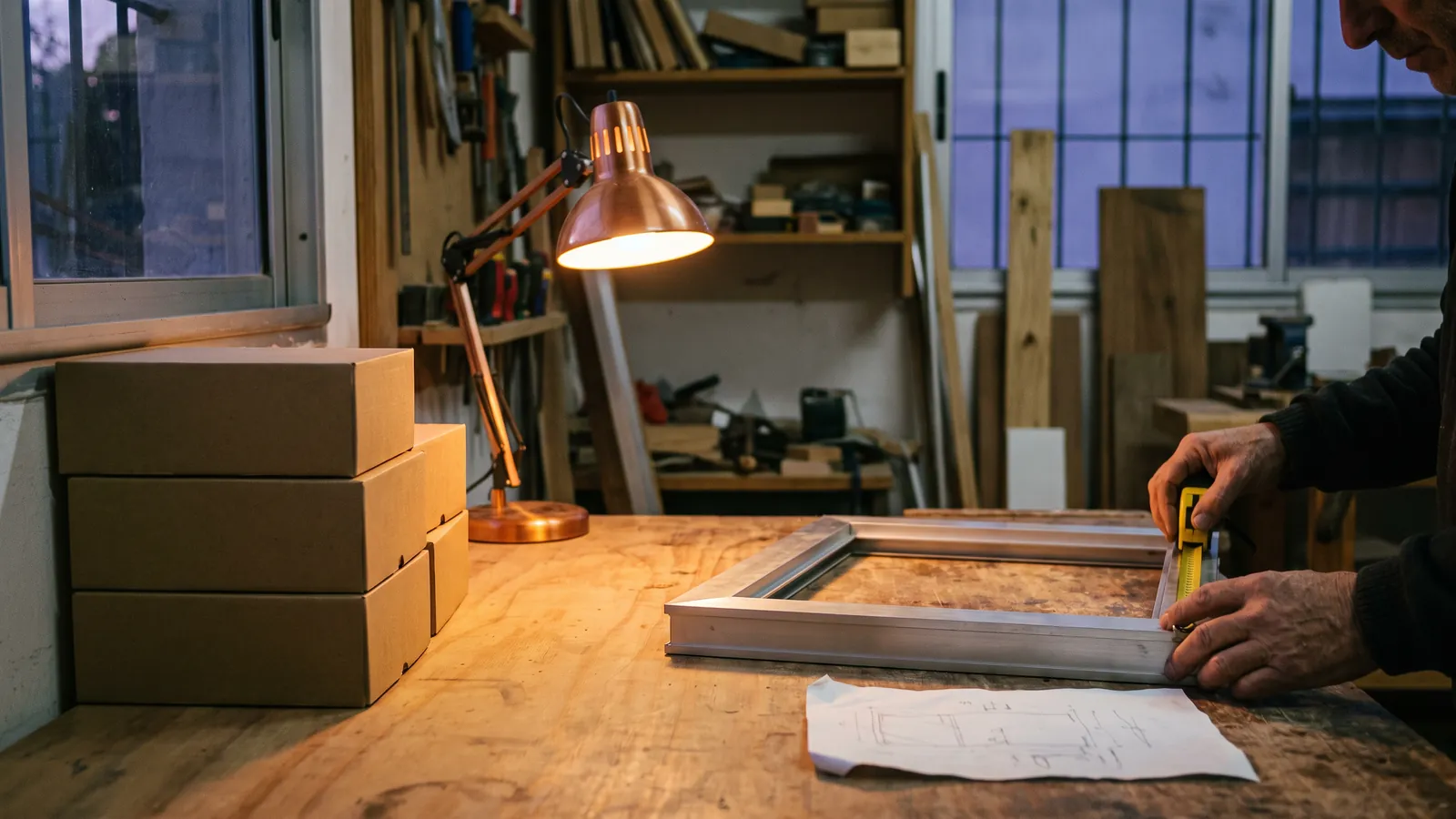
An aluminum joinery factory quotes with hundreds of variables: profiles, measurements, glass, accessories, finishes, rules and exceptions only the team knows. No generic product models that. Building a custom quoting tool meant spending weeks understanding how a price is built in that company before writing a line of code. The result was not a tool the company had to learn, but a tool that already knew how the company works.
Off-the-shelf software makes you adapt your process to its logic. Custom software adapts to how you really work. That difference is invisible the first month: it shows when the process changes.
Practical criteria
- Is the process a competitive advantage? If yes, custom. If it is a standard administrative process, off-the-shelf.
- How many parallel spreadsheets exist today? Each one is a sign that the current tool does not model the real work.
- Will the process change? If your company grows, it will. A custom system evolves with it; an off-the-shelf one waits for the vendor to decide.
- Does it need to talk to other systems? Integration between tools is usually the biggest hidden cost of off-the-shelf software.
- Who will maintain it? Custom demands a long-term technical partner. If you do not have one, off-the-shelf is safer.
What we do
Before proposing a build, we check whether something already exists that solves the problem. If it does, we say so. If not, we build around how the company works, in stages, and we stay so the system keeps pace with the business for years. That continuity is, in the end, what decides whether the investment was worth it.